
How Much Does Epoxy Floor Coating Cost?

The Short Answer
For budgeting purposes, professionally installed epoxy floor coatings typically run between $6 and $10 per square foot. With $8 used as the midpoint, an average two-car garage works out to roughly between $3,200 and $4,000. What you actually pay hinges on floor size, how much preparation the slab calls for and the coating system that suits the room, and those details only become reliable after an in-person evaluation.
What Affects the Cost?
01
Floor Size
02
Concrete Condition
03
Surface Preparation
04
Coating System
05
Decorative Finish
What Are You Really Paying For?
For a stage-by-stage look at a professional coating project and why each step matters, see what happens during an epoxy installation.
A professional estimate covers the entire project: labor for preparation and application, the grinders and the abrasives they wear through, commercial-grade materials and the knowledge to choose the right system for your floor. Materials make up only part of the price.
If one quote is far lower than the others, it is reasonable to ask what has been left out. Lighter grinding, fewer coats or no crack repair amount to a smaller scope, not the same work at a better price. Comparing proposals item by item is the most reliable way to see what each one covers.
Trimming preparation, coats or repairs reduces the price because it reduces the work, and the finished floor tends to reveal the difference over time.
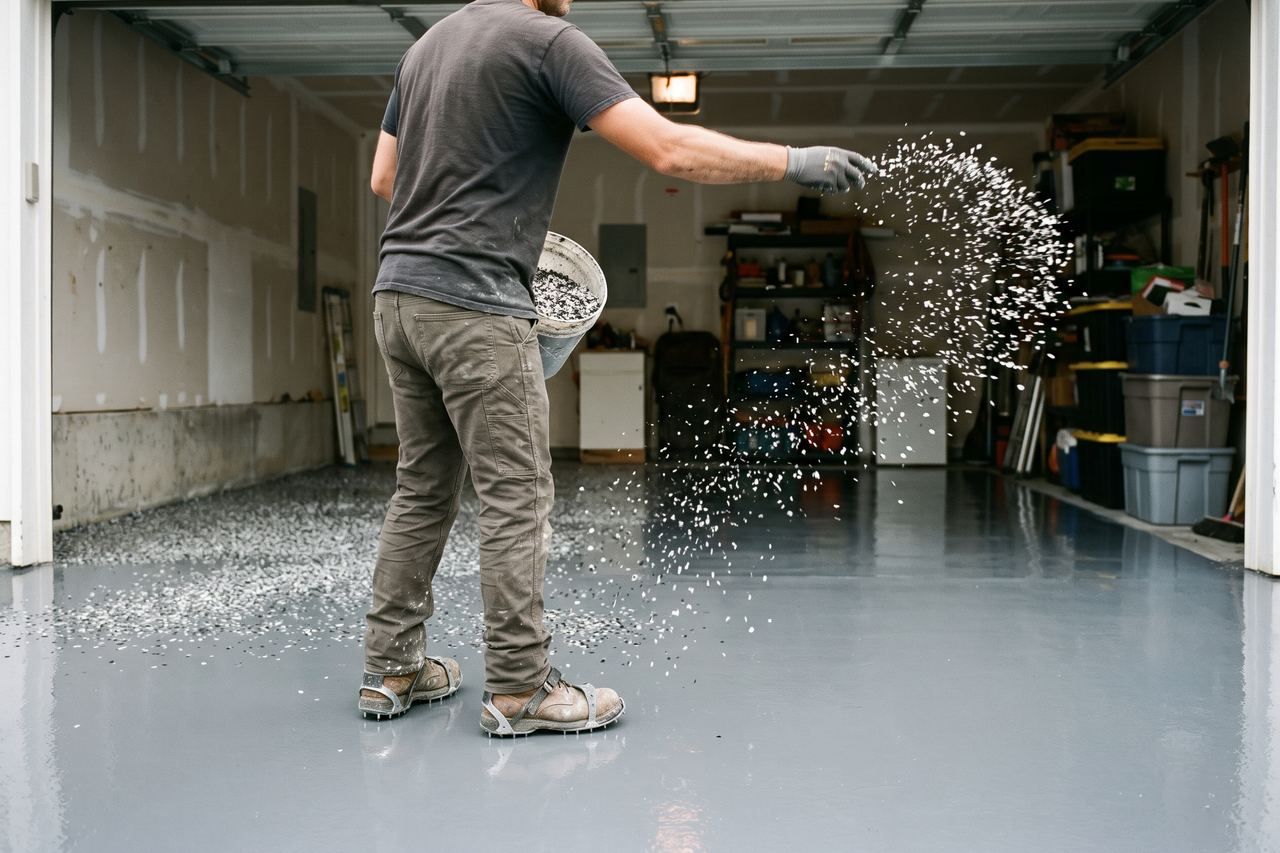
How Much Does a Garage Floor Cost?
Here is how the $8 planning rate works out across typical garage sizes, for early budgeting only.
| Garage Size | Square Footage | Planning Estimate |
|---|---|---|
| Single-car garage | 250 sq ft | $2,000 |
| Standard 2-car garage | 400 sq ft | $3,200 |
| Oversized 2-car garage | 500 sq ft | $4,000 |
| 3-car garage | 750 sq ft | $6,000 |
*Every figure in this table is the square footage multiplied by $8, a planning rate inside the $6–$10 range common for professional installations. Use these figures for rough planning; they are not quotes. Your actual price depends on the condition of the concrete, the preparation it needs and the coating system selected, and it can be determined only after an in-person evaluation of the floor.*
Is It Worth the Cost?
Think about what a garage floor handles: vehicles pulling in and out, drips from parked cars, dropped tools and equipment dragged across concrete that was never meant to stay looking good. Bare concrete absorbs all of it.
Raw concrete is porous. Spills soak in and leave stains, discoloration builds up with use and constant friction gradually wears the surface down. When a coating goes onto concrete that was not correctly profiled, it may not bond dependably, and when it lifts or peels the owner ends up paying for the floor twice.
A coating selected for the actual conditions of the space keeps liquids at the surface, where they can be wiped up, far more effectively than bare concrete. That benefit counts for the most in garages, shops and utility rooms where appearance and easy cleanup are priorities.
What Should Be Included in Your Quote?
A complete proposal describes the whole project, not only the coating product. As you read through a written proposal, confirm that it addresses each of the following:
- Concrete evaluation — moisture testing and an in-person assessment of the slab before the project is planned
- Surface profiling — the grinding or shot-blasting step that leaves the concrete textured enough for a coating to bond
- Crack and spall repair handled on bare concrete before coating begins
- Primer selection guided by the slab’s moisture readings and porosity
- Base coat and broadcast — the color coat and any decorative flake, applied as the chosen system specifies
- Topcoat application chosen for the traffic and conditions the floor will see
- Site cleanup that deals with dust, debris from preparation and proper waste disposal
- Cure-stage guidance describing what the floor can handle at each point after the final coat
Should a written proposal leave out any of these items, raise it with the contractor and get an answer before signing.