
Commercial Epoxy Flooring
Your Floors Should Work as Hard as Your Business Does
Commercial floors take a type of repetitive wear that typical concrete seldom faces. Entryways, checkout counters and main walkways see constant foot and cart traffic whenever the business is open. Equipment follows the same paths over and over, grinding down the same areas. Unsealed concrete beneath all that absorbs whatever lands on it, and the floor gradually breaks down.
Customers form an opinion of a business before they reach the front desk. Scuffed aisles, stains by the register and crumbling spots at the entrance communicate something about the operation even when nobody is deliberately looking at the floor. That impression lands whether you mean it to or not.
Bare concrete in a busy business also becomes tougher to clean as it ages. Small cracks and worn patches from heavy use trap grit that mopping can’t fully lift. Staff put more work into the floor and see less return for it.
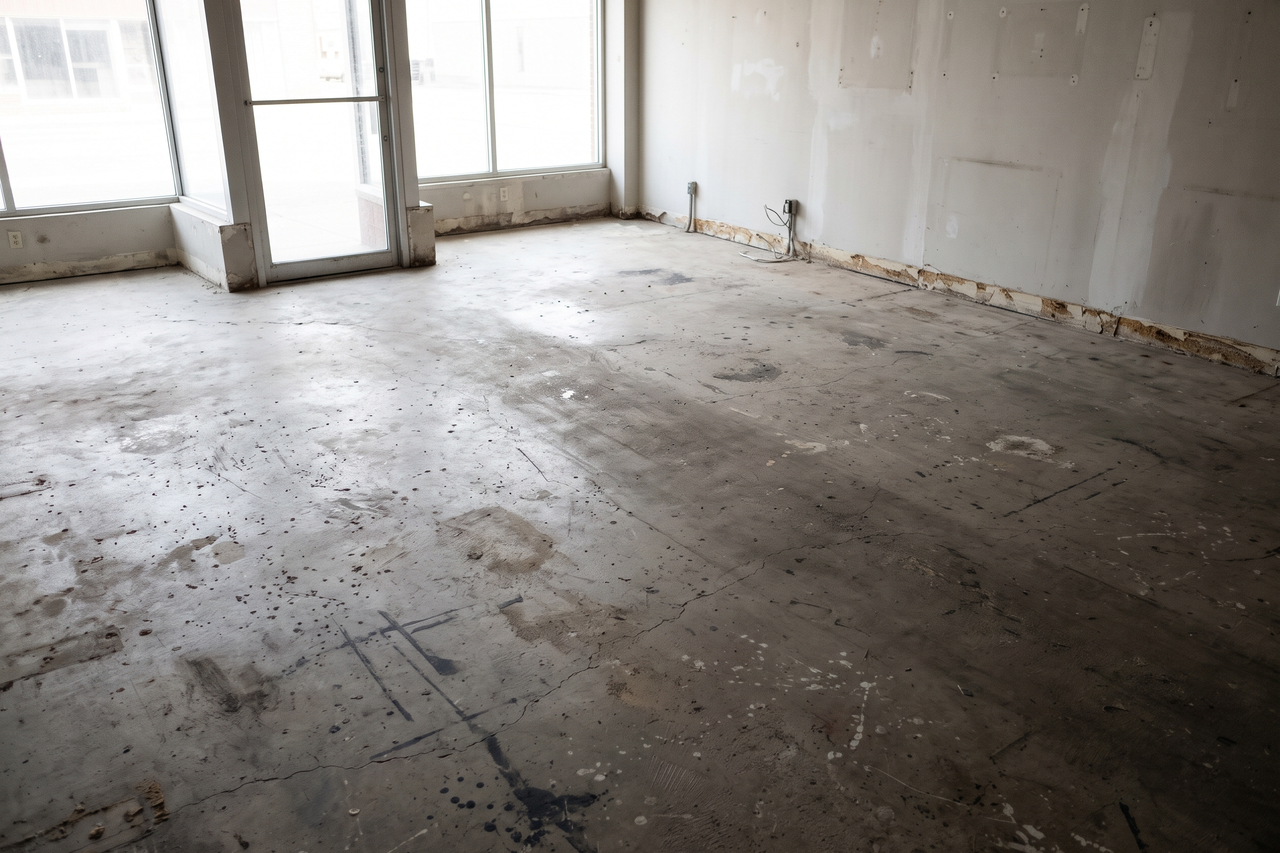

The Right Floor Starts With Understanding Your Space
Commercial floors face widely varying demands. An auto service shop, a medical office corridor, a retail floor and a restaurant kitchen each contend with a different combination of traffic, cleaning chemicals, spills and cleaning schedules, and each depends on the floor’s appearance to a different extent.
The flooring professional begins by understanding how the floor functions from one shift to the next: the traffic and loads that cross it, the cleaners and chemicals it regularly encounters, how much its look matters to customers and whether access to the space has to be planned around operations. The coating recommendation comes from that assessment, not a generic default.
Commercial coatings span a broad range of uses. Solid color works well for service and back-of-house areas. Flake systems bring texture and visual interest. Metallic finishes fit sales floors and client-facing spaces where the floor helps define the atmosphere.
A Commercial Flooring Project Without the Guesswork
01
Tell Us About Your Property
02
Get a Flooring Plan
03
Transform Your Space
Planning a Commercial Flooring Project?
The Wrong Floor Can Become an Expensive Problem
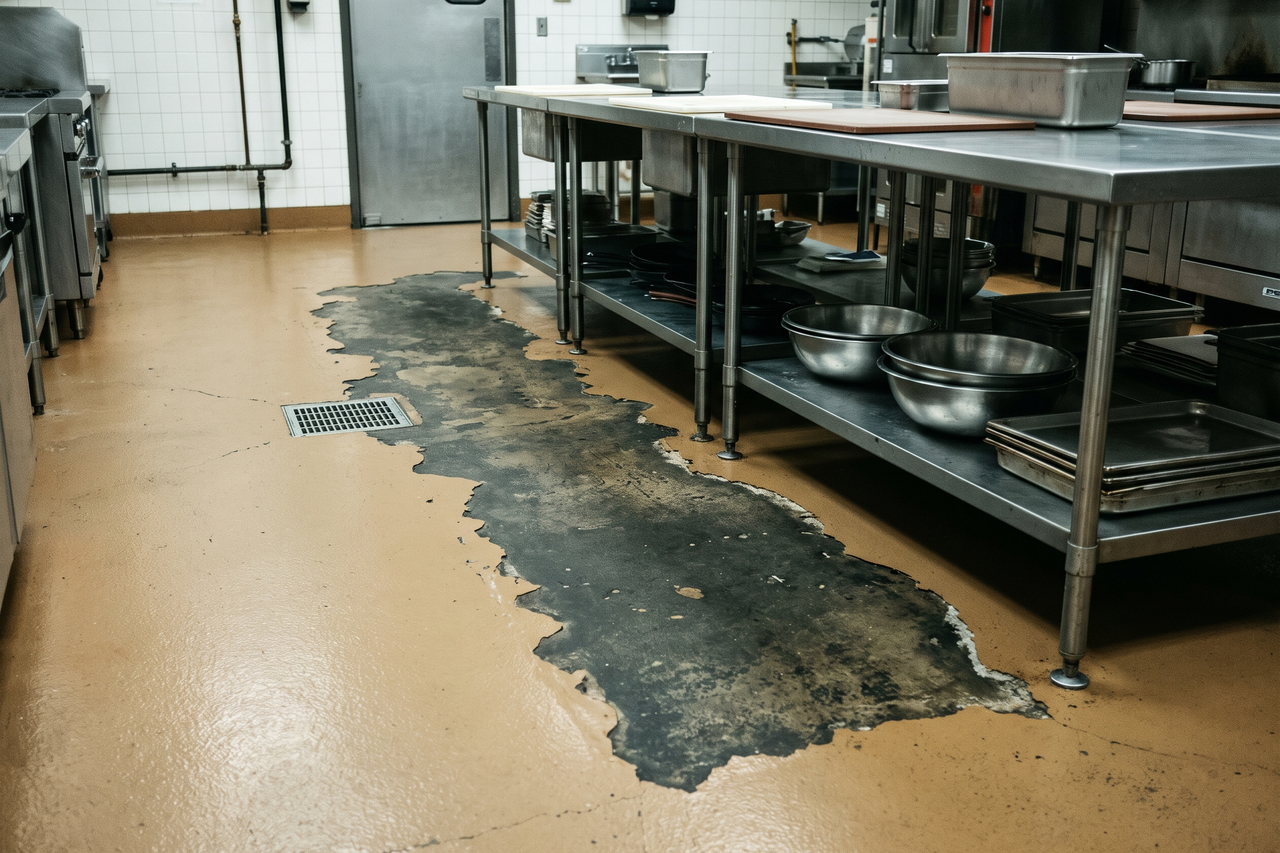
Imagine a high-traffic corridor or service area where the coating has started to peel at the seams. A flaw that seems cosmetic grows into something larger. Lifted edges create a trip hazard, and grime collects in gaps a mop can’t reach.
Repairing that failure in a working business involves more than the price of materials and labor. The area must be closed off, fixtures or equipment relocated, the failed coating removed, the concrete inspected and prepped, and a new system applied, all at a moment the business had not budgeted for.
Picking a system that fits the real demands on the floor, and investing real effort in concrete preparation before application, is the most reliable way to avoid that situation.
A Floor That Makes Your Space Work Better
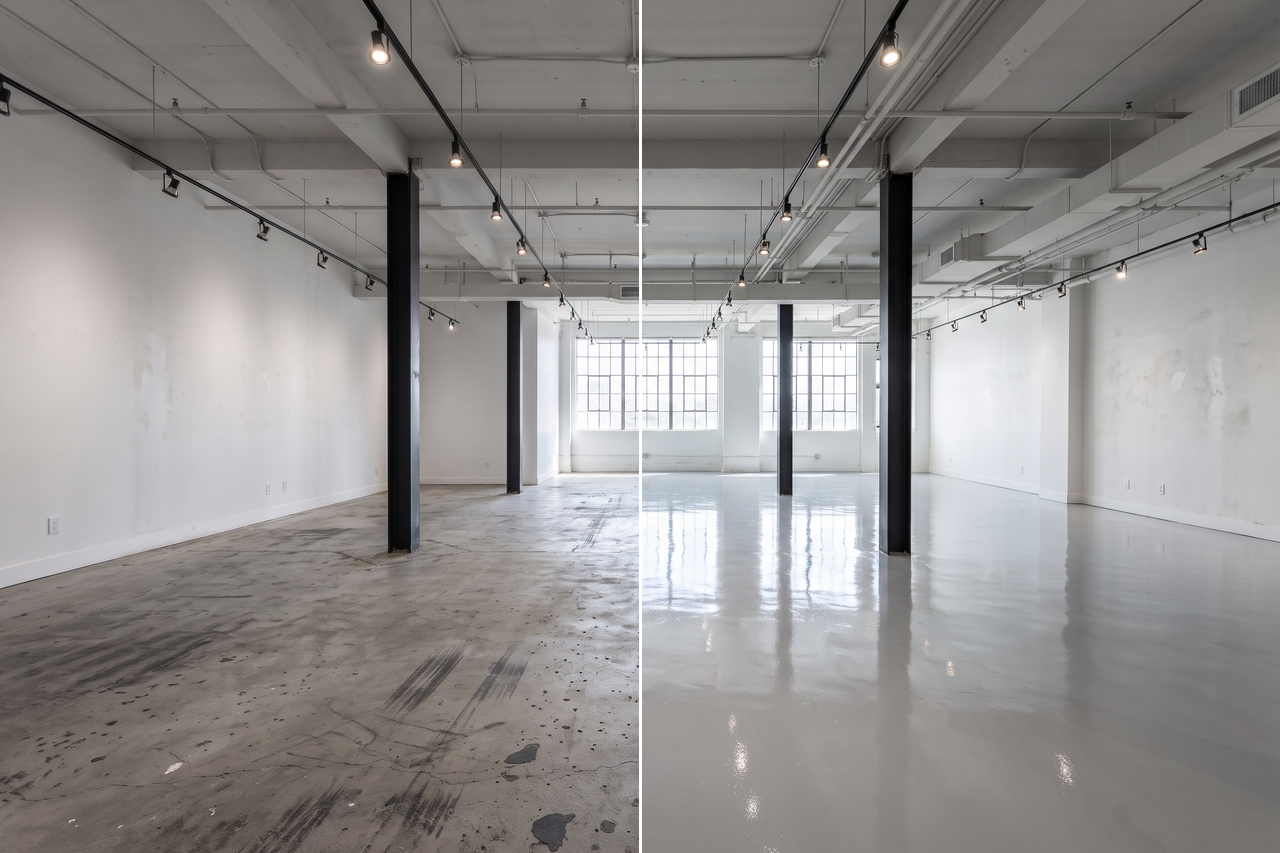
When the coating suits the conditions the floor actually faces, everyday maintenance becomes much simpler. Spilled liquids remain on the sealed coating, so staff can clean them with ordinary products before they penetrate. Most upkeep comes down to regular sweeping and mopping. A sealed floor also tolerates frequent cleaning far better than bare concrete given the same treatment.
A coated surface reflects overhead lighting more effectively than raw concrete, which can brighten aisles and work areas with no change to the fixtures. Aisle striping, color-coded zones and wayfinding markers can be incorporated if the chosen system allows it and your installer thinks they suit the layout.
A coating selected for its environment changes the floor from an ongoing maintenance burden into an asset that supports how the business operates.
What Does Commercial Epoxy Flooring Cost?
Cost depends on the specifics: square footage, the condition of the concrete, the amount of prep and crack repair required, the system that fits the environment and the finish you choose. Needs such as heightened chemical resistance, extra slip resistance or specialty finishes add to both the prep and the materials.
Fitting the work around operations or phasing it depends on the project and the contractor. Raise it early, while the estimate is still taking shape.