
Epoxy Basement Flooring
Your Basement Shouldn't Feel Unfinished From the Floor Up
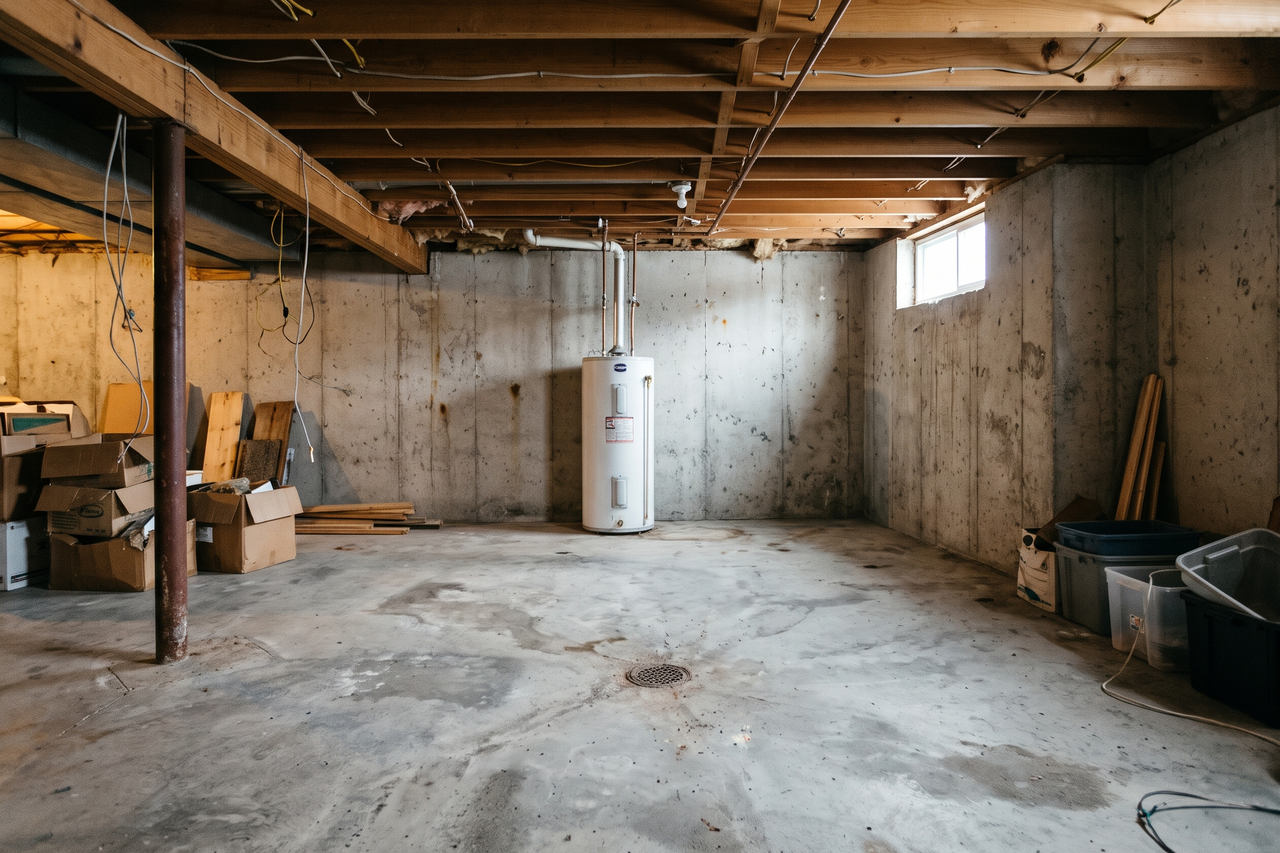
An uncoated basement floor keeps the whole level feeling half-done. Whether you are planning a workout room, home office, laundry space or workshop, plain gray concrete signals that the job isn’t complete. The floor is often what people notice first when they come downstairs.
Bare basement concrete is a challenge to keep clean. It gives off dust that drifts onto stored items and furniture. Spills absorb the moment they hit and leave marks a mop won’t lift. However often it gets swept, a porous slab rarely feels truly clean.
Plenty of flooring materials that perform well on upper levels struggle on concrete below grade. A slab resting against the soil acts differently from the rest of the house, particularly when it comes to moisture. A coating designed for concrete gives the basement a surface that works with those conditions rather than against them.
The Right Basement Floor Starts With the Concrete Underneath
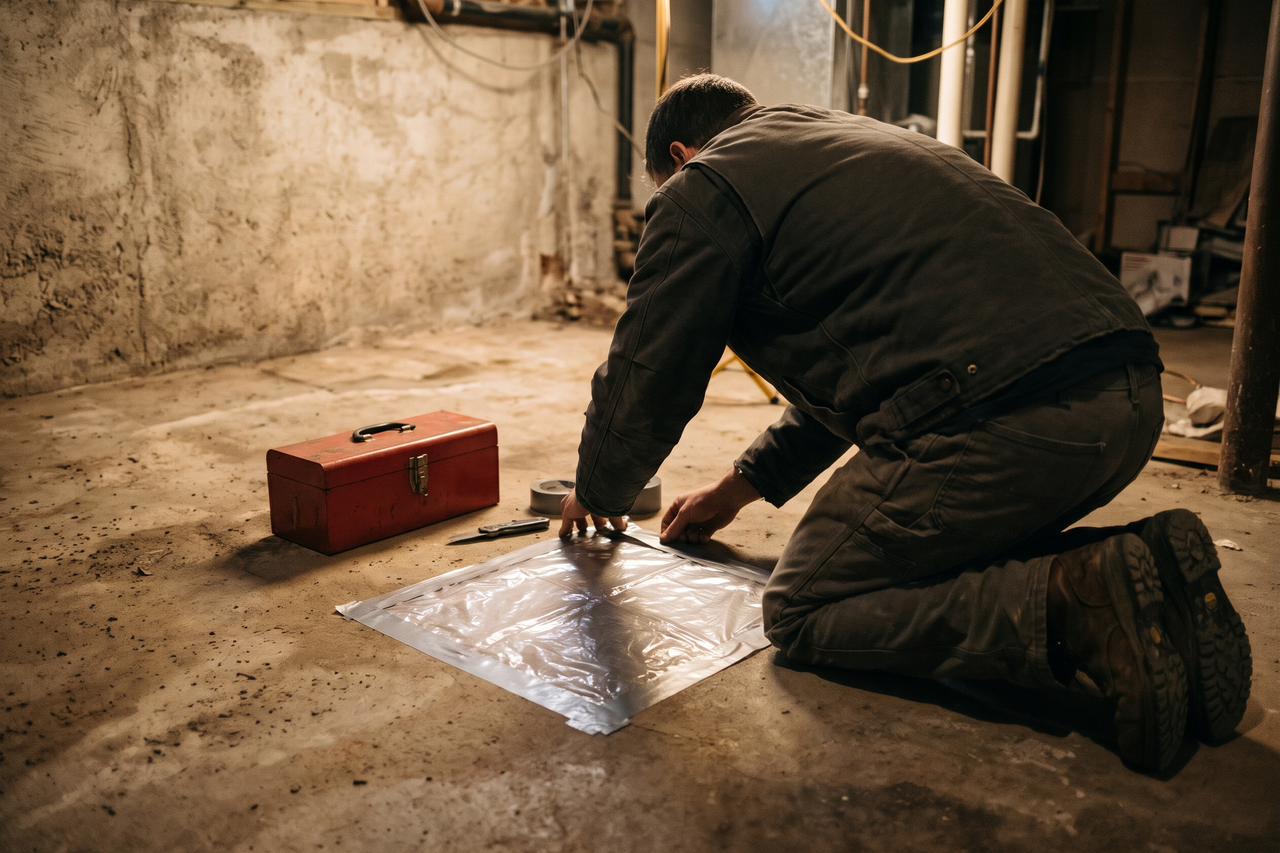
Below-grade slabs bring their own variables. Moisture vapor moving up through the concrete, hydrostatic pressure from the surrounding soil, leftover adhesive or sealer, existing cracks and earlier patches all influence how much prep the floor needs before a coating can bond.
Your installer assesses the concrete before recommending a system, paying attention to signs of moisture and the slab’s overall soundness. Leave that step out on a basement floor and the moisture questions go unanswered, leaving room for vapor pressure from below to cause problems no one anticipated.
With the slab’s condition understood, choosing a finish becomes far simpler. Solid color delivers a clean, consistent look. Flake brings texture and traction to floors that see regular use. Metallic epoxy produces a glossy, dimensional depth that paint can’t replicate.
A Better Basement Floor Is Easier Than You Think
01
Tell Us About Your Basement
02
Choose the Right Floor
03
Transform the Space
Ready to Make Your Basement Feel Finished?
Don't Turn Your Basement Floor Into a Project You Have to Do Twice
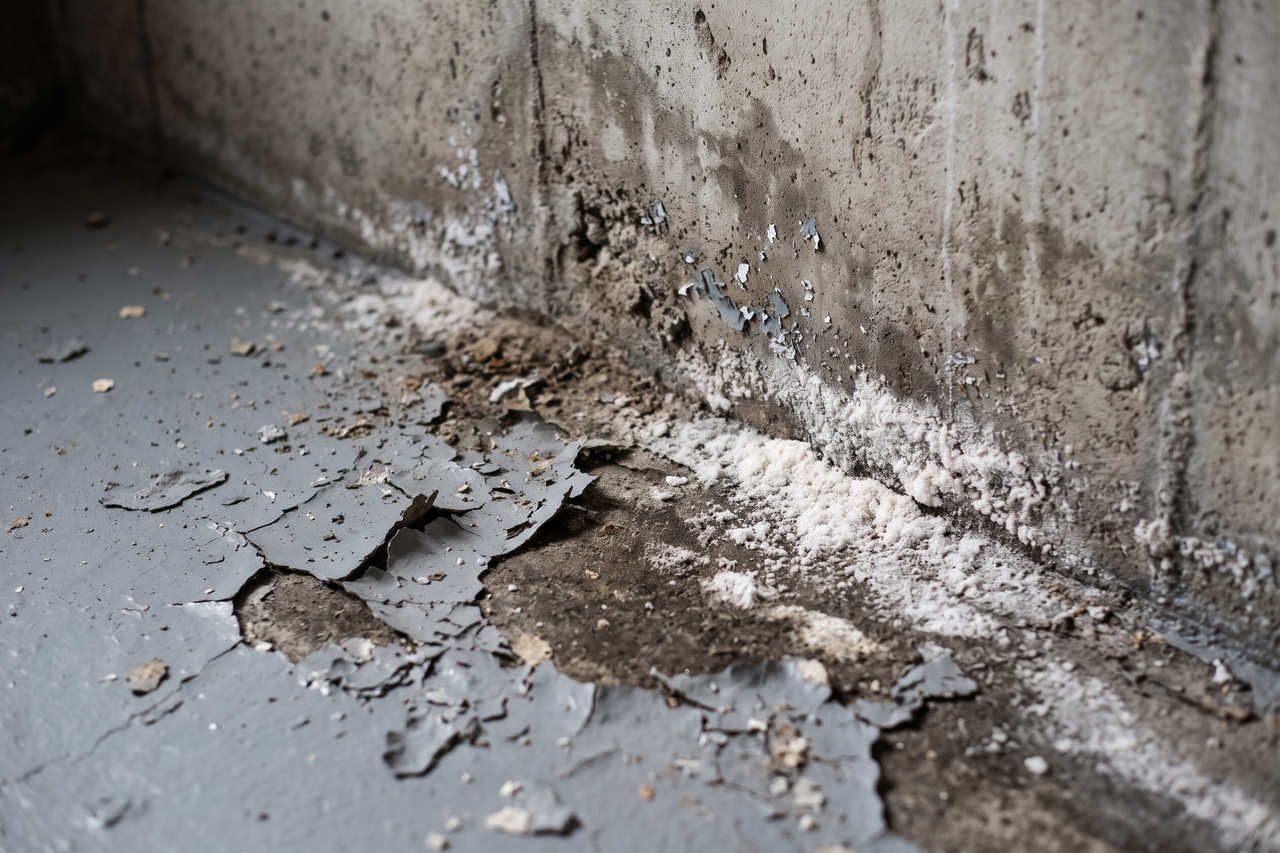
Basement coating failures usually trace back to conditions present before installation started. Leftover sealer or adhesive, concrete that was never ground and moisture nobody tested are some of the most common causes, and every one of them exists before the first coat is applied.
Below-grade slabs face moisture conditions that upstairs floors rarely encounter. When vapor movement and soil pressure aren’t assessed beforehand, that pressure can force the coating away from the concrete, producing blisters, lifted edges and loose areas in places that looked sound at first. Low-bid jobs frequently leave out moisture testing, and the results tend to appear after the work wraps up.
Grinding, crack repair and moisture checks done ahead of coating give the floor a real opportunity to perform well over time. When those steps are left out, the eventual repair often means grinding off the failed coating entirely, an expense that outweighs what proper prep would have cost at the outset.
A Floor That Changes How Your Basement Feels
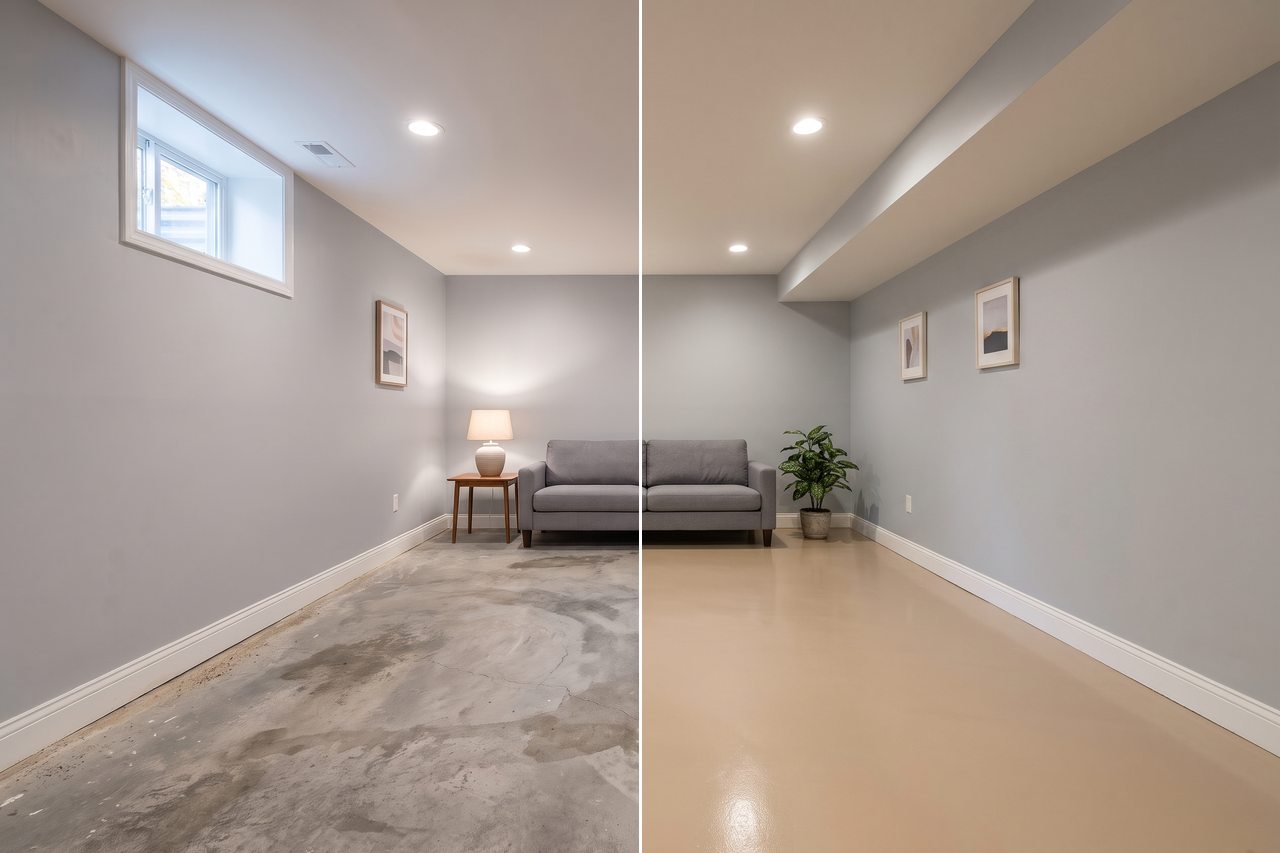
Coating a basement floor shifts the feel of the entire room. The smooth surface bounces light around rather than absorbing it, making the space look larger and brighter than bare concrete did. Dirt sweeps up with little effort, and spills stay on the surface long enough to wipe away.
It’s practical as well. A lower level that used to collect leftover boxes becomes a room people actively want to use. The floor frequently determines which kind of basement you end up living with.
The way a basement gets used often reflects how its floor was finished. A sealed, completed surface shows the room was treated as real living space, and people tend to use it that way.
What Does Epoxy Basement Flooring Cost?
Basement coating costs hinge on several factors: floor size, what the inspection shows about the slab’s condition and moisture, whether old adhesive or coatings need removal, the extent of crack repair, and the system and finish you select.
General price ranges say little about basements, since the slab itself determines the real cost. An estimate built on the actual condition of the slab, plus your plans for the room, is the figure to budget around.